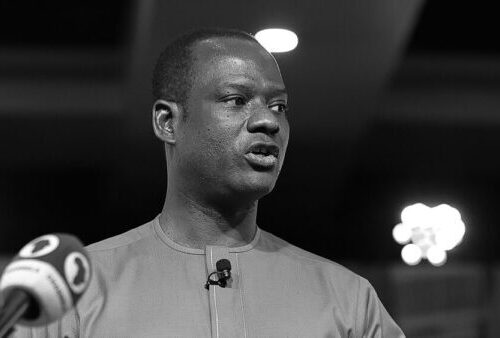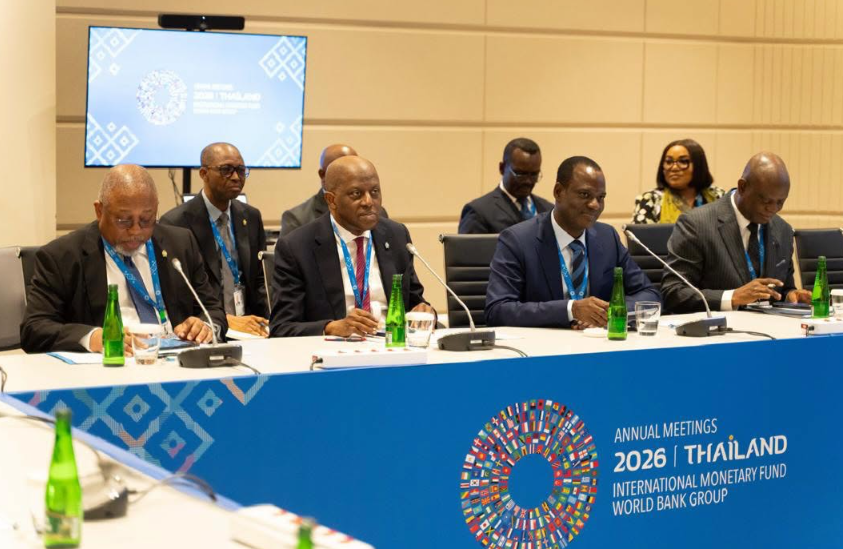

Olayemi Cardoso, the governor of the Central Bank of Nigeria, on Thursday, supplied insights into the reasons behind the Monetary Policy Committee’s latest interest rate minimize.
Mr Cardoso, who spoke on a panel on the ongoing World Bank/IMF conferences in Bangkok, Thailand, additionally lauded the fiscal authorities for offering synergy in ways in which ensured easy transmission and communication of coverage choices.
In a move that surprised market watchers and analysts, the Central Bank of Nigeria (CBN) minimize the benchmark interest rate to 23 per cent in September.
This choice adopted two consecutive retentions of the Monetary Policy Rate (MPR) at 26.5 per cent, after holding it in May and July and decreasing it by 50 foundation factors in February from 27 per cent.
“It took the market by surprise and markets, as we know, generally don’t like surprises,” Mr Cardoso mentioned on the panel dialogue themed “How Central Banks Decide—Committee Decision-Making and Communication in an Era of Uncertainty”.
“I think the communications aspect was very, very well thought through.”

Reasons
The CBN governor defined that a number of issues had occurred earlier than the choice was made, which additional supported it.
“For instance, we had considerably modified plenty of the issues that weren’t working… for instance, coordination between the fiscal and the financial.
“We had signed up an MOU between the fiscal and the monetary to ensure that we were all on the same page, and that was very well received. We have a overnight rate, which gives more clarity to what the real rates are as opposed to a system that we had in place prior to that.”
On the macro entrance, Mr Cardoso mentioned Nigeria was in an excellent place.
“Our external reserves were the highest we had had in 18 years. Inflation was coming down consistently even though, internationally, in many places, it was going up; in our case, it was coming down. And growth was still going at a reasonable enough pace.”
The Central Bank governor mentioned the state of affairs supplied readability on the truth that Nigeria was in a comparatively good place to do what the financial authorities might have performed earlier.
“And in doing that, which I need to inform you, our communication channel after the MPC is, now we have a dialogue with the press. And in fact, within the strategy of the dialogue, I spent extra time than regular in explaining the place we have been coming from and the place we have been.
“And it made it easier for them to understand why we took the decision. Because you could go the other way around and talk about the decision first, and then now leave people wondering, ‘how does that relate to something else?’ And I had to go back and say, well, this is where we were coming from. These are the headwinds we’ve met. This is how we’ve conquered them. And this is where we are now. So we’re in a very good position to correct now an imbalance in our transmission mechanism that has been dying to be corrected.”
The governor additionally reiterated that the choice was supported by the exterior buffers and macro stability created.
“Whatever be the case, we have the buffers, we’re in a good place, the macros are looking well, that really there’s nothing for anybody to worry themselves about,” he mentioned.
“It took the market abruptly, however by the point they digested the data, they usually knew, particularly the markets, the markets knew that there was a break within the transmission; they knew this as a result of they function in that market and clearly knew that the motion we’re taking is smart.
“I will finish by saying that to do such a thing successfully, you must have an element of credibility with the markets. And when I say credibility with the markets, the markets must have consistently seen you over a period of time doing things in the right way and believe they can put their trust in you.”
Discover extra from Premium Times Nigeria
Subscribe to get the newest posts despatched to your e-mail.