
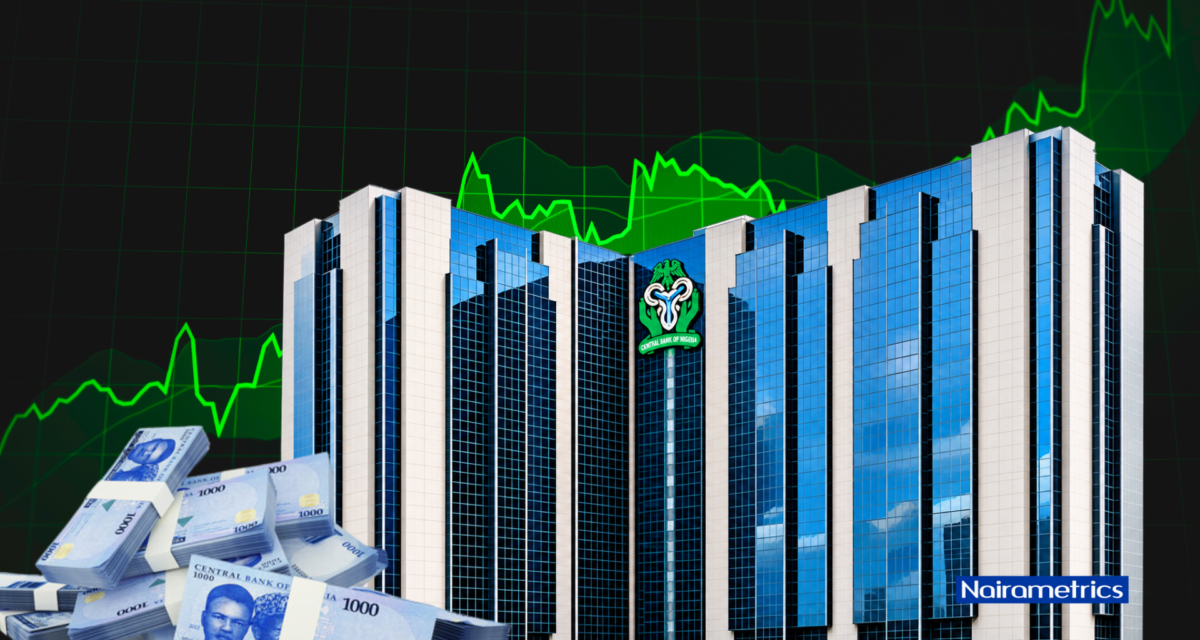

The Central Bank of Nigeria (CBN) recorded a internet liquidity injection of roughly N3.20 trillion by way of maturing securities and contemporary auctions in October 2026, as repayments of N10.69 trillion exceeded the N7.49 trillion raised from Open Market Operations (OMO) and Nigerian Treasury Bills (NTBs).
Nairametrics evaluation of CBN public sale and maturity knowledge exhibits that contemporary issuances changed solely about 70% of the funds returned to traders between October 2 and 29.
The growth marked a shift from September, when the CBN absorbed a internet N6.62 trillion by way of OMO operations alone, reflecting a moderation in liquidity withdrawals throughout October.
CBN public sale repayments exceed allotments:
The CBN carried out three OMO auctions and three Treasury Bills auctions throughout October, with mixed allotments of roughly N7.49 trillion.
- Investor subscriptions reached N13.23 trillion, however solely about 57% of the bids have been allotted, reflecting selective acceptance of demand.
- OMO auctions raised N6.18 trillion towards N6.71 trillion in recognized maturities, leaving a internet reimbursement surplus of roughly N527 billion.
- Treasury Bills auctions raised N1.31 trillion towards N3.985 trillion in reported repayments, producing a internet distinction of roughly N2.68 trillion.
- Combined repayments reached N10.694 trillion, exceeding contemporary allotments by roughly N3.20 trillion.
- The October 28 Treasury Bills auction allotted only N71.16 billion against N1.908 trillion in subscriptions, leaving roughly 96% of bids unfilled.
- The October 6 OMO auction initially absorbed extra liquidity than matured that day, with N3.309 trillion allotted towards N2.168 trillion in repayments.
However, further maturities of N2.409 trillion on October 13 and N2.133 trillion on October 27 modified the month-to-month place.
The remaining two auctions raised simply N316.10 billion towards roughly N4.19 trillion in subscriptions, leaving N3.87 trillion in bids unallotted.
Banking liquidity rises as yields fall:
The lowered tempo of securities issuance coincided with elevated placements on the CBN’s Standing Deposit Facility (SDF) and declining short-term public sale yields.
Banks’ internet SDF placements exceeded N6 trillion following the October 13 OMO maturity and remained substantial in direction of month-end.
The decline in comparable OMO cease charges between August and October represented 238 foundation factors.
These actions adopted the Monetary Policy Committee’s September decision to reduce the Monetary Policy Rate to 23%.
For fixed-income traders, decrease yields may cut back returns on newly bought securities, whereas present fixed-rate devices might profit from rising market costs.
Analysts disagree on liquidity affect:
Speaking with Nairametrics, Chief Executive Officer of Globalview Capital Limited, Aruna Kebira, described the upper repayments as optimistic, arguing that the CBN was lowering excellent obligations.
He additionally prompt that the reimbursement sample may partly replicate efforts to help liquidity following substantial subscriptions to the Dangote Refinery public supply, though he acknowledged that the regulator’s intentions couldn’t be established.
- “Based on the figures you have provided, it means the CBN is paying out more than it is raising. That should be commended because it reduces its outstanding obligations,” Kebira stated.
- “It is possible that the higher repayments are partly intended to provide liquidity to the system after the substantial funds committed to the Dangote IPO,” he added.
- “For monetary policy purposes, the instrument you should focus on is OMO,” stated Olubunmi Ayokunle, Head of Financial Institutions Ratings at Agusto & Co.
- “A significant proportion of the holders of those OMO securities are foreign investors. Therefore, the repayments do not necessarily translate into an equivalent injection of liquidity into the domestic economy,” Ayokunle stated.
Kebira famous that the Dangote Refinery’s N2.15 trillion supply, reportedly subscribed 3 times over, implied demand of roughly N6.45 trillion, however cautioned that this was not essentially the quantity withdrawn from home liquidity.
Ayokunle defined that Treasury Bills are issued on behalf of the Federal Government, whereas OMO operations are the CBN’s discretionary financial coverage instrument.
He additionally argued that IPO subscriptions usually switch funds between financial institution accounts fairly than take away them from the monetary system.
October liquidity estimate has limits:
The estimated N3.20 trillion reimbursement surplus represents the distinction between specified securities maturities and contemporary allotments, fairly than a complete measure of home liquidity creation.
- Government disbursements, international change interventions, forex actions and different banking transactions can have an effect on the precise liquidity place.
- The decline in SDF balances in direction of month-end doesn’t essentially symbolize an equal enhance in lending to companies and households.
- Repayments to international traders might have a unique home liquidity affect from repayments to Nigerian monetary establishments.
Selective Treasury Bills allotments may assist comprise authorities borrowing prices, though continued under-allotment might require financing changes.
Renewed large-scale OMO gross sales may reverse the downward stress on short-term yields.
The distinction between OMO operations and Treasury Bills is vital when decoding the October figures as a result of the 2 devices serve totally different functions.
For banks and traders, the interval however confirmed elevated deposit-facility balances alongside decrease yields on newly issued short-term securities.
Whether these situations persist will depend upon subsequent OMO auctions, authorities financing necessities and the CBN’s evaluation of inflation and financial-system liquidity.