

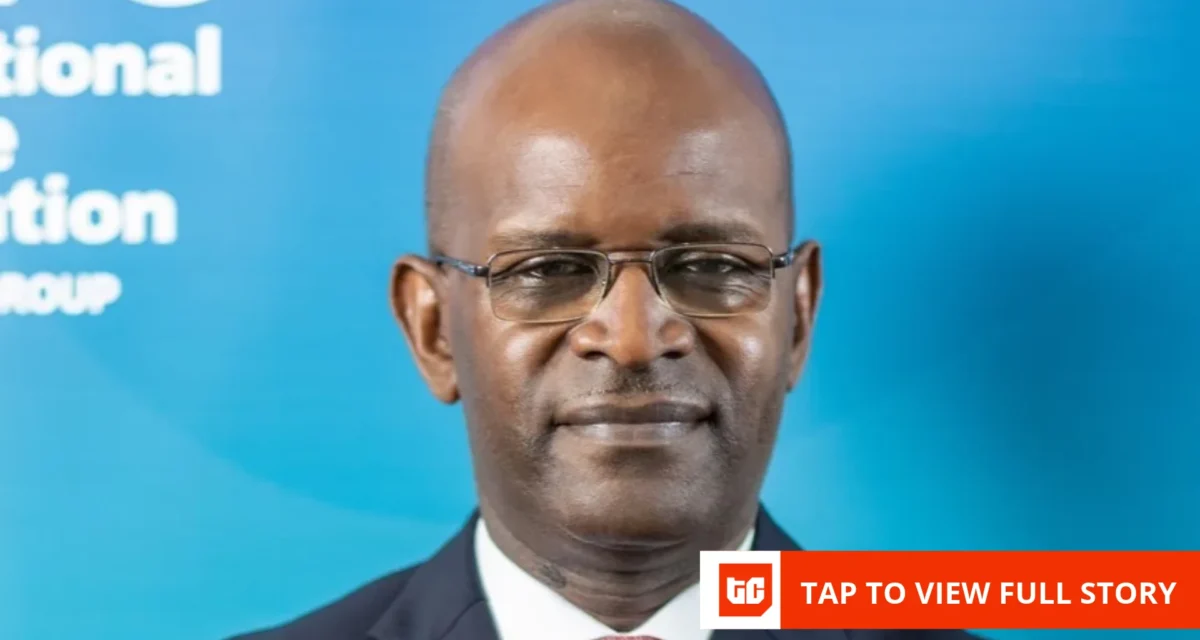

After twenty years of false begins, the International Finance Corporation has chosen 15 agritech corporations throughout the continent, backing them with fairness whereas deploying portfolio ensures to hyperlink them straight to the steadiness sheets of almost 200 business banks.
For the previous twenty years, the hunt to modernise African agriculture by know-how has been suffering from failed pilots, undercapitalised startups, and business lenders unwilling to enterprise past city company headquarters. Yet, with the continent importing an estimated $90 billion in staple meals commodities yearly—a reliance that straight fuels foreign money depreciation and sticky inflation—the strain to industrialise home meals manufacturing has shifted from a improvement ambition right into a macroeconomic crucial.
Speaking on the sidelines of the Africa Financial Industry Summit (AFIS) in Luanda, Aliou Maiga, Director of the Financial Institutions Group for Africa on the International Finance Corporation (IFC), revealed that the private-sector lending arm of the World Bank Group is rolling out a continental framework designed to clear up agricultural finance as soon as and for all.
The technique marks a departure from the venture-capital mannequin that beforehand pushed agritech startups to tackle balance-sheet lending threat. Instead, the IFC is positioning agritech corporations as digital origination and field-management engines, whereas channelling business financial institution liquidity into rural smallholder worth chains backed by IFC risk-sharing ensures.
“We have been looking for solutions in this space for about 20 years,” Maiga defined to TechCabal on Wednesday. “We explored the possibilities back then, but the technology was not sufficiently developed. We tried again about 10 years ago, but the conditions still weren’t right. This time, we have identified 15 agritech companies across Africa, with coverage spanning much of the continent.”
Under this tripartite mannequin, the IFC gives direct fairness funding to these 15 vetted agritech companies to assist them full product improvement and obtain business scale. Rather than forcing these startups to elevate costly debt to lend straight to farmers—a observe that has strained steadiness sheets throughout the African tech ecosystem—the IFC connects them straight to its continental community of almost 200 business banks and institutional lenders.
TC DATA LAB / AGRITECH FINANCE
Who pays, who lends, who takes the chance?
IFC is altering how agricultural know-how
corporations join African farmers to finance.
Explore how the mannequin shifts lending away
from startup steadiness sheets and in direction of
business banks, supported by
fairness funding and risk-sharing ensures.
15
Agritech corporations recognized by IFC
~200
Institutions in IFC’s wider lending community
20
Years of makes an attempt to develop a scalable resolution
The startup not has to be the financial institution
In one earlier method, agritech startups
borrowed capital and lent straight to farmers.
IFC’s proposed framework separates
the know-how supplier from the lender.
Switch between the fashions.
EARLIER MODEL / STARTUP-LED LENDING
External funding
Debt or funding capital raised by the startup
↓
Startup secures funding
Agritech startup
Sources farmers, manages operations
and carries direct lending publicity
↓
Startup funds farmers
Smallholder farmers
Receive financing and agricultural companies
THE PRESSURE POINT
Lending threat and the necessity to elevate
mortgage capital can pressure a startup’s
steadiness sheet and restrict its scale.
This is a simplified illustration of
startup-led agricultural lending,
not a declare that each earlier
agritech or IFC programme used
precisely this construction.
IFC MODEL / SEPARATED ROLES
IFC
Equity for chosen agritechs +
portfolio risk-sharing ensures
for taking part lenders
↓Equity assist
15 agritech companies
Farmer origination,
threat knowledge and subject operations
↓Risk-sharing assist
Commercial banks
Lend from their very own
steadiness sheets
THE CONNECTION
Agritechs determine and assist
farmers; taking part banks
make and fund lending selections.
IFC ensures share specified dangers.
↓
Bank credit score + field-level assist
Smallholder farmers
Access to potential financing,
agricultural recommendation and
community-based subject brokers
Important: IFC’s almost
200 monetary establishments type a
wider potential lending community.
The variety of banks taking part
on this particular agritech programme
has not been disclosed.
Everyone has a unique job
Select a participant to see who gives
the capital, who originates farmers,
who carries lending publicity and
who receives assist.
IFC: making the mannequin investable
IFC gives direct fairness funding
to chosen agritech corporations,
serving to them develop merchandise
and expand their operations.
Separately, portfolio ensures
can cowl an agreed portion of
eligible lender losses. They do
not essentially get rid of the
financial institution’s threat or assure each mortgage.
Agritech: discovering and supporting farmers
The 15 chosen corporations are supposed
to determine farmers, collect agricultural
knowledge, assist assess dangers and coordinate
last-mile companies by native brokers.
Instead of financing your complete mortgage
portfolio themselves, they’ll focus
on know-how and operational supply.
Commercial banks: offering the loans
Participating banks present credit score
straight from their steadiness sheets,
utilizing info and origination
assist equipped by agritech companions.
The financial institution stays a lender uncovered
to credit score threat. IFC’s assure
might take up an outlined share of
eligible losses below the agreed phrases.
Farmers: receiving capital and steerage
Smallholders might acquire entry to
formal credit score alongside sensible
assist delivered by native
brokers and related units.
IFC says yields have elevated by
as a lot as 50% in some circumstances.
That is an upper-end instance,
not a median or a forecast
for taking part farmers.
How a smallholder might entry financial institution financing
Follow a hypothetical farmer by
the mannequin, from first contact with
a subject agent to agricultural assist.
Tap any step or use the following and
again controls.
A subject agent reaches the farmer
A community-based agent visits a
smallholder and makes use of a related
system to collect details about
the farm and its wants.
Why it issues: rural farmers might
lack dependable connectivity, digital
literacy or direct entry to
standard banking channels.
The agritech builds a threat image
Agricultural knowledge, subject observations
and farmer info assist the
agritech assess manufacturing situations
and assist credit score origination.
The intention is to make rural lending
selections higher knowledgeable, not
to assure that each farmer
will qualify for credit score.
A business financial institution considers the mortgage
A taking part financial institution can use the
origination info to consider
the farmer and, if authorised,
present financing from its personal
steadiness sheet.
The crucial shift: the agritech
doesn’t want to elevate and deploy
all of the mortgage capital itself.
IFC shares eligible lending threat
The portfolio assure is an
association between IFC and a
taking part lender. It can
take up an agreed share of
qualifying credit score losses.
This is a financing safeguard,
not essentially a separate fee
to the farmer or a step that
occurs after every mortgage is authorised.
Guarantee protection, pricing,
eligibility and loss-sharing
percentages haven’t been
disclosed within the story.
The farmer receives persevering with assist
Field brokers might help farmers
interpret soil situations, reply
to climate adjustments, schedule
fertiliser use and monitor
crop well being.
The supposed final result is increased
productiveness and extra sustainable
agricultural lending relationships.
Results rely upon implementation
and native situations.
IFC cites yield will increase of up
to 50% in some circumstances, however has not
equipped a programme-wide
common on this account.
The IFC mannequin separates three capabilities
that have been beforehand concentrated in
some agritech startups:
know-how and farmer origination,
credit score funding, and threat sharing.
Whether this interprets into scalable
agricultural lending will rely upon
financial institution participation, farmer outcomes
and the precise phrases of the ensures.
What is a portfolio assure?
A portfolio assure is a risk-sharing
association masking an outlined group
of eligible loans. If qualifying
debtors default, the guarantor
might take up an agreed portion of
the ensuing losses.
For a financial institution, this will make lending
to unfamiliar or underserved
sectors extra manageable. The financial institution
nonetheless wants to assess debtors,
administer loans and adjust to
the assure settlement.
What we don’t know:
The story doesn’t disclose the
assure share, funding
dimension, variety of taking part banks,
complete credit score to be deployed or
anticipated variety of farmers reached.
How to learn this interactive
Source: TechCabal interview
with Aliou Maiga, Director of IFC’s
Financial Institutions Group for
Africa, at AFIS in Luanda.
15 agritech companies:
The quantity IFC says it has recognized
for its new framework.
Nearly 200 establishments:
IFC’s broader business financial institution and
institutional lending community,
not confirmed programme members.
Earlier method:
A generalised illustration of
startup-led agricultural lending.
Farmer journey:
A hypothetical sequence based mostly
on the working mannequin described
within the interview. It isn’t a
documented particular person mortgage.
Risk allocation:
Actual assure phrases and
lender obligations might differ
between agreements.
The agritech companies originate the farmers, assess agricultural threat, and handle the last-mile operational relationships. The business banks then disburse credit score straight from their steadiness sheets, with IFC portfolio ensures absorbing draw back threat till lenders construct their very own underwriting confidence within the agricultural sector.
The macroeconomic motivation behind this capital engineering is pressing. African international locations at the moment spend roughly $90 billion annually to import fundamental meals staples comparable to rice, wheat, and sugar—commodities that would readily be cultivated on their very own soil.
“Africa imports approximately $90 billion worth of food commodities, including rice, wheat and sugar. Yet, much of what we import could potentially be produced locally,” Maiga mentioned. “The idea behind our work is to help Africa address its food security challenges, create jobs and increase productivity. Producing more food locally also reduces dependence on imports and can help moderate inflation because locally produced food is often cheaper. Ultimately, this has implications for interest rates as well, because inflation is one of the factors that influences interest rates.”
By dampening meals inflation, which carries the biggest weight in shopper value baskets throughout Sub-Saharan Africa, home agricultural productiveness straight eases the financial strain that has compelled central banks to preserve punishingly excessive benchmark rates of interest.
Achieving this productiveness, nevertheless, requires confronting the bodily realities of the African smallholder. Unlike manufacturing or monetary companies, which have quickly automated, African farming stays dominated by dispersed, rural smallholders who are suffering from extreme info deficits and low technical functionality.
Maiga dismissed the notion that software program alone can bridge this divide. In agriculture, pure-play digital platforms fail as a result of rural producers can’t be served completely by smartphone functions. Instead, the IFC’s portfolio corporations depend on a hybrid mannequin that blends cell know-how with bodily neighborhood agent networks.
“Our approach is to combine technology with agents on the ground, usually recruited from the communities where farmers operate,” Maiga noticed. “These agents are physically present and equipped with devices that enable them to identify and address farmers’ day-to-day challenges. Through this approach, we can improve agricultural productivity and yields. In some cases, yields have increased by as much as 50%.”
These subject brokers use related handheld units to conduct soil diagnostics, observe climate disruptions, schedule fertiliser software, and monitor crop well being, translating agronomic knowledge into actionable steerage for farmers.
Beyond know-how and business financial institution steadiness sheets, Maiga emphasised that the agritech sector can’t scale with out regulatory alignment from nationwide and regional governments.
The IFC is actively integrating its agritech framework into broader state initiatives, together with a flagship agricultural programme launched with the Nigerian authorities, in addition to formal agreements being negotiated with sub-national administrations throughout key markets.
These sovereign agreements are designed to set up particular manufacturing targets, assure entry to infrastructure, and take away regulatory bottlenecks throughout your complete worth chain.
Once these state commitments are secured, the IFC coordinates with farmer cooperatives, agritech platforms, and business lenders to disburse funds and systematically measure the impression on yields.
For Africa’s agritech sector, which has struggled by successive funding winters and tech downturns, the shift in institutional backing indicators a strategic maturation.
By pairing field-level know-how with the steadiness sheets of mainstream business banks, the IFC is trying to convert smallholder agriculture from an uninsurable charity case into an investable, productive business engine.