

Nigeria’s healthcare dialog may have to increase past hospitals and clinics because the rising burden of long-term care more and more shifts to households.
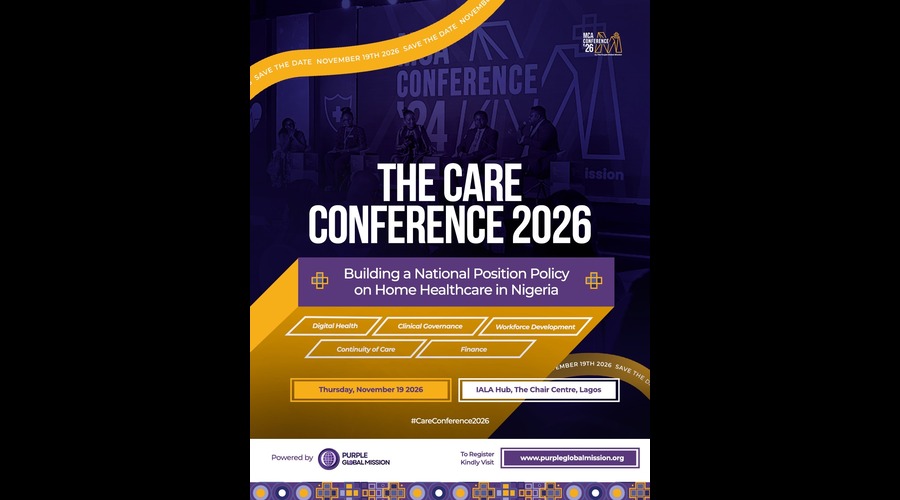
This is the main target of the 2026 Care Conference, convened by The Purple Global Mission, which is able to look at how residence care can turn into a structured part of Nigeria’s healthcare system slightly than a casual duty largely carried by households and particular person caregivers.
The convention, scheduled for November 19, 2026, in Lagos, might be held underneath the theme, “Care as Infrastructure: Building a National Position on Home Care for Nigeria.”
At the centre of the dialogue is a query with vital financial implications: how does Nigeria account for, finance and regulate the care that occurs after a affected person leaves a hospital?
Across the nation, households typically take duty for rehabilitation, aged care, incapacity help, restoration and long-term help at residence. While these actions kind an essential a part of healthcare supply, they continue to be largely exterior formal well being methods and financing buildings.
“You cannot finance care you cannot count,” is without doubt one of the propositions underpinning the convention.
The problem is especially related in a healthcare system the place households already carry a considerable share of healthcare prices. According to figures cited within the convention transient, roughly 71 per cent of Nigeria’s well being spending is out of pocket, whereas medical health insurance covers an estimated 10 to 13 per cent of the inhabitants.
As extra care strikes from hospitals into properties, the monetary duty can prolong past medical payments to incorporate transportation, caregiving time, rehabilitation, nursing help and different types of long-term help.
The convention will look at the methods required to make residence care safer, coordinated, measurable and sustainable, with discussions spanning workforce growth and safety, scientific governance, continuity of care, digital well being infrastructure, care knowledge, financing and regulatory frameworks.
The give attention to knowledge is critical. Without dependable info on the quantity, nature and price of care being supplied exterior formal well being services, policymakers and different stakeholders have restricted visibility into the size of the sector and the sources required to help it.
The discussions can even take into account the transition from hospital to residence, together with structured discharge processes, home-based nursing and rehabilitation, digital data and financing fashions that might scale back the burden presently carried by households.
For households, the implications prolong past healthcare prices. Long-term caregiving may place stress on family revenue and productiveness when family members have to scale back working hours or go away employment to offer care.
A key function of the convention might be “The First Caregivers: The Family Panel,” which is able to carry the experiences of Nigerians offering care at residence into the coverage dialog. The occasion can even function the launch of The Homecare Framework: Care as Infrastructure for Everyday Life.
One of the supposed outcomes is the event and refinement of a Nigerian National Position on Care as Infrastructure, which The Purple Global Mission says will help continued coverage dissemination, legislative engagement and stakeholder dialogue round how care is funded, regulated and built-in into Nigeria’s healthcare system.
Speaking on the rationale for the initiative, Mrs Abiola Ayilara, Founder of The Purple Global Mission, mentioned, “Care in Nigeria has never been the problem, the absence of infrastructure around it has.”
The convention is anticipated to carry collectively policymakers, regulators, healthcare establishments, insurers, traders, expertise firms, growth companions, care suppliers, teachers and household caregivers.
For Nigeria, the dialog is more and more shifting past who offers care to how the nation can construct the methods, financing buildings and knowledge infrastructure wanted to acknowledge care as an integral a part of its healthcare system and wider financial system.