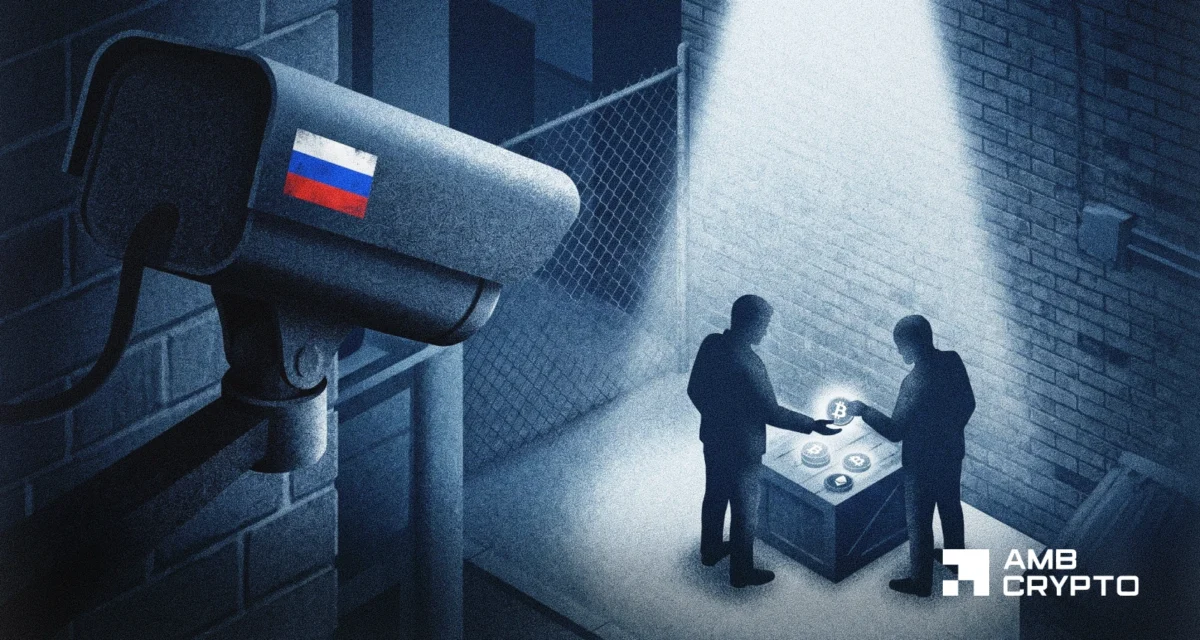

Russians have simply eight months to commerce Bitcoin [BTC], Ethereum [ETH], and different crypto property with one another.
Starting from the first of July, 2027, this direct crypto trading amongst friends that doesn’t want a regulated third occasion, often known as peer-to-peer (P2P) trading, will turn into unlawful.
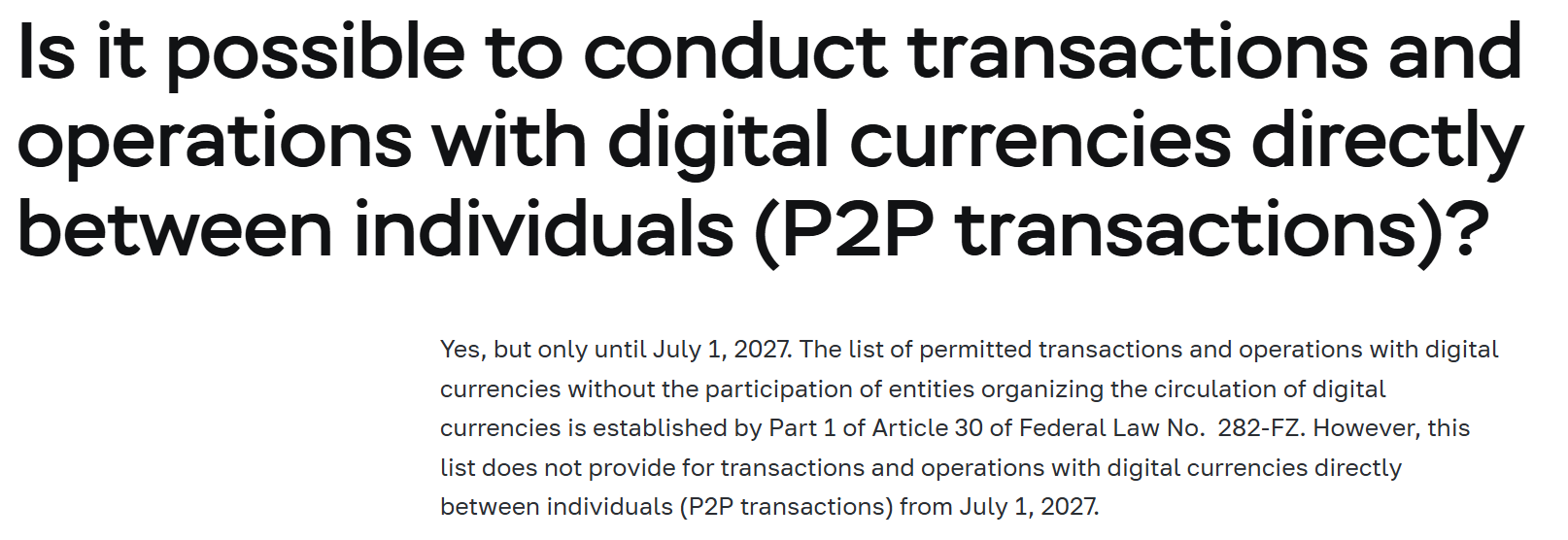
This is a part of Article 30 of the Federal Law No. 282-FZ (On Digital Currencies and Digital Rights). The laws was signed into regulation in August by President Vladimir Putin and have become efficient on the first of September 2026.
In truth, the identical framework allowed a brand new licensing regime for corporations and banks that need to function crypto exchanges and act as digital asset custodians. Already, Russia’s largest financial institution, Sberbank, has received two licenses and plans to supply crypto trading from December.
While the brand new Russian crypto regulation regime might speed up institutional adoption, the strict guidelines in opposition to P2P and self-custody transfers could squeeze out some retail traders.
Why is Russia banning P2P and self-custody crypto transfers
Per the brand new guidelines, crypto trading will solely be permitted through “entities organizing the circulation of digital currencies” or regulated platforms. That guidelines out P2P transfers.
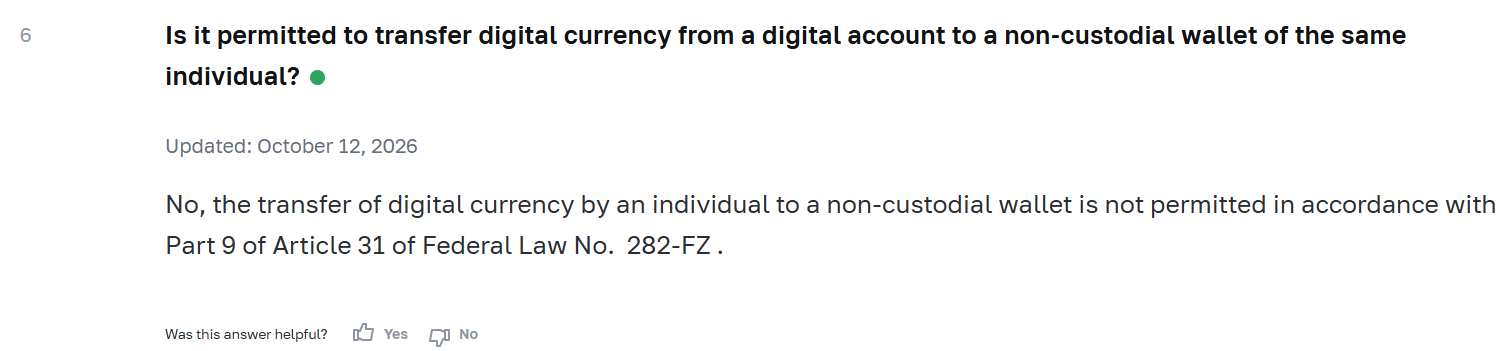
Additionally, withdrawals to self-custody are banned. Russian customers can ship property from self-custody wallets to regulated entities. But they’ll’t transfer the funds to self-custody wallets. Unlike P2P transfers, which will probably be outlawed by 2027, the self-custody withdrawal ban is already efficient.
Foreign stablecoins corresponding to Tether’s USDT are permitted for public trading on regulated platforms. Put merely, the Russian authorities can have full visibility into crypto capital flows, together with custodied property.
Interestingly, killing P2P and self-custody withdrawals removes crypto blind spots that almost all international regulators try to deal with.
For Russia, the tight guidelines additionally embody a cap for retail crypto investments at $3.5K per yr. Crypto won’t be used for funds domestically in Russia, however will probably be allowed for cross-border and worldwide commerce.
In different phrases, Russia needs to rein in capital flight by limiting residents from transferring funds to offshore and self-custody platforms.
This will even guarantee higher transparency and scale back tax evasion. At the identical time, importers and exporters will probably be allowed to use crypto for worldwide commerce, probably to bypass sanctions.
Global P2P crypto transfers surge 300% to $230B
Globally, Brazil, Thailand, the EU zone, and different jurisdictions are adopting practically related tight P2P and self-custody transfers. But they search to cope with anti-cash laundering, fraud, and tax evasion, making their coverage incentives barely totally different from Russia’s.
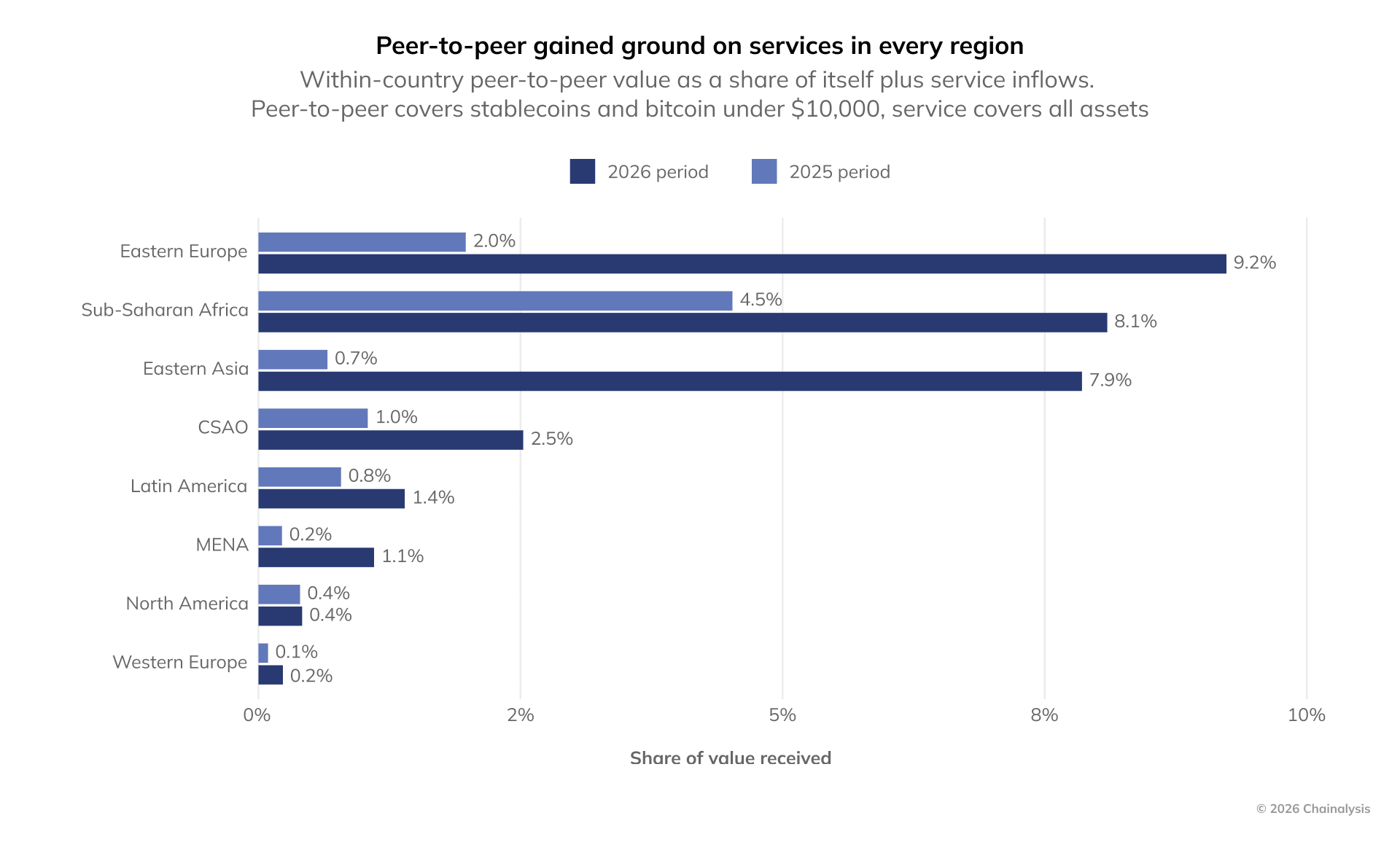
That stated, international P2P and private pockets flows elevated +300% to $228B previously yr, in accordance to Chainalysis. This underscores rising consumer mistrust within the conventional system and controlled entities. But governments need to crack down onerous on this loophole.
Final Summary
- Russia to ban P2P crypto transfers by July 2027.
- Global P2P flows elevated 3x to $230 billion in 2026 amid a heavy authorities crackdown.