
Safaricom, Kenya’s largest telecommunications operator, generated KES 4.9 billion ($38 million) from Fuliza, its M-PESA overdraft service that lets prospects full transactions once they lack sufficient cash of their wallets.
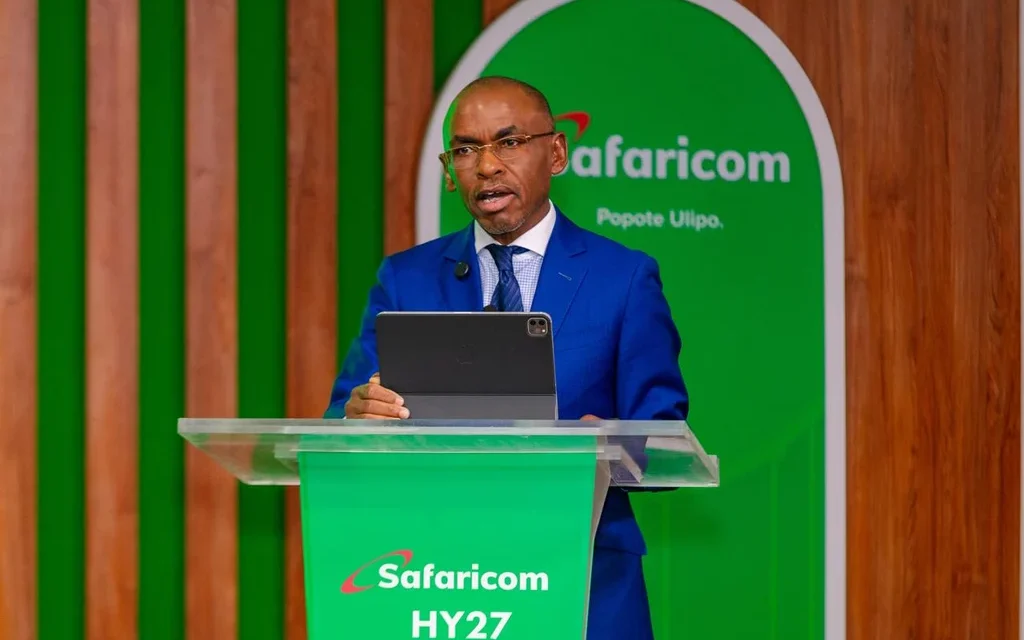
On Thursday, Safaricom stated at its investor briefing held in Nairobi that Fuliza’s income rose 86% within the six months to September 2026, with the variety of debtors practically doubling to 17.2 million. The service, operated by Safaricom in partnership with NCBA Bank and Kenya Commercial Bank (KCB), grew to become the corporate’s largest cell lending enterprise by income, even as the typical quantity borrowed fell 24.6%.
The figures level to rising reliance on short-term credit score as a income supply for M-PESA. Lending is rising a lot quicker than funds income. However, smaller mortgage sizes and declining reimbursement ratios increase questions on borrower behaviour and the enterprise’s economics.
Fuliza disbursed KES 1.16 trillion ($8.97 billion) throughout the interval, up 84% from the earlier yr. Its buyer base additionally grew 88.9% to 17.2 million.
Revenue rose at nearly the identical tempo as buyer development. The common quantity borrowed, although, declined 24.6% to KES 192 ($1.49), from KES 254.60 ($1.97).
The numbers counsel Fuliza is reaching more prospects via smaller advances. Safaricom has not disclosed how a lot of the expansion got here from prospects borrowing more steadily, new debtors getting into the service, or adjustments in credit score limits.
Fuliza’s development contrasts with Safaricom’s different cell lending merchandise, which it operates with banking companions.
KCB M-PESA, a financial savings and mortgage service supplied with Kenya Commercial Bank (KCB), generated KES 500 million ($3.9 million) in revenue, up 11.9%, even as its energetic buyer base fell 7% to 4.2 million.
M-Shwari, Safaricom’s financial savings and microloan service with NCBA Bank, recorded income development of seven.7% to KES 1 billion ($7.8 million), whereas energetic prospects fell 5.8% to 7.4 million.

As Safaricom appears to increase M-PESA past funds into credit score, financial savings, insurance coverage and service provider companies, its investor presentation reveals credit score income grew 54.4% to KES 7 billion ($54.3 million) within the half-year, in contrast with 13.6% development in general M-PESA income to KES 100.07 billion ($775.7 million).
Fuliza accounted for roughly 71% of income from the six lending merchandise, making it the portfolio’s essential supply of earnings.
The reimbursement figures provide one other dimension to the expansion. Fuliza’s repayments reached KES 1.15 trillion ($8.94 billion), equal to 99.6% of disbursements, down from 102.4% a yr earlier. KCB M-PESA’s ratio additionally fell to 96.7% from 99.5%, whereas M-Shwari’s declined to 105.3% from 108%.
“Behavioural scoring and multiple funding partners are helping us extend responsible credit, personalise access and manage portfolio risk more effectively for customers and businesses across Kenya,” Safaricom CEO Peter Ndegwa stated.
The figures present Fuliza’s development, however not the complete image of the chance behind it. The repayment-to-disbursement ratio fell to 99.6% from 102.4%, although the comparability doesn’t present how a lot of the loans issued throughout the interval stay unpaid. Repayments recorded within the six months could embrace cash owed from earlier lending intervals.
Safaricom didn’t disclose Fuliza’s non-performing mortgage ratio in both report. The disclosures additionally don’t present how credit score danger is break up between Safaricom and its banking companions.